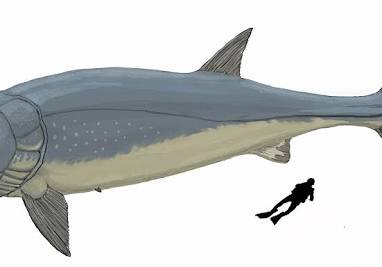
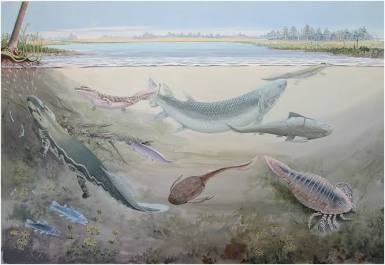
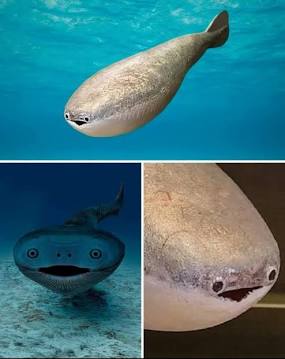
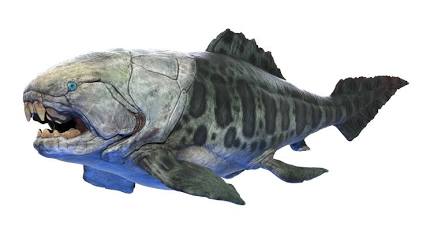
Prehistoric fish included giants like the whale-sized Leedsichthys and the ambush predator Rhizodus, which had fangs and hunted on land and in water. Some early fish, like Haikouichthys, were among the earliest known forms of life. Other ancient fish, like the bichir, are still around today, demonstrating a long evolutionary lineage.
Early and Ancient Fish
- Haikouichthys:This fish from about 518 million years ago in China is a contender for the earliest known fish species.
- Bichirs:These fish, which have fossils dating back to the Triassic period (around 250 million years ago), can breathe atmospheric oxygen and still live in swampy waters today.
Gigantic and Predatory Fish
- Leedsichthys:This ancient fish, which lived about 165 million years ago, was the largest fish on record and could reach the size of a whale shark.
- Rhizodus:A freshwater ambush predator from about 335 million years ago, Rhizodus was 5 meters long and had large, fangs. It preyed on other fish and amphibians, sometimes lunging out of the water to catch them.
- Hineria:This hunting fish, over 12 feet long, could hunt both marine and terrestrial prey with 2-inch long teeth.
Evolutionary Significance
- Ancestor of Land Vertebrates:Rhizodus was a tetrapodomorph, a group of fish that gave rise to all living terrestrial vertebrates, including amphibians, reptiles, birds, and mammals.
- Early Teleosts:Leptolepis represents an early teleost fish, a group that makes up 96% of all fish species alive today.
- Lampreys and Hagfish:These “fish-like” animals are some of the oldest in the world and stopped evolving before jaws were developed, making them important to zoologists studying the evolution of life.
The “Jaws fish” refers to a great white shark, but the scientific “Jaws” (jaw) in fish evolved from the first pair of gill arches in early jawless fish, like the fossilized Metaspriggina and ostracoarms, eventually leading to early jawed fish such as placoderms and modern cartilaginous and bony fish. This fundamental evolutionary step, which occurred around 440-485 million years ago, is considered “perhaps the most profound and radical evolutionary step in vertebrate history”.
The Evolution of Jaws in Fish
- Starting Point: Jawless Fish:The earliest vertebrates were jawless fish called ostracoderms. They had gill arches that supported their gills and aided respiration.
- The Innovation:Over time, the first pair of these pharyngeal arches evolved into a movable jaw in some lineages. This was a critical innovation that provided a significant evolutionary advantage.
- Early Jawed Fish:The first jawed fish, such as the heavily armoured placoderms and spiny sharks (acanthodians), appeared in the fossil record during the late Ordovician and Silurian periods.
- Modern Jaws:The jawed fish that we know today, like cartilaginous (sharks, rays) and bony fish, also emerged during the late Silurian period and have continued to evolve.
Fun Facts About Jaw Evolution
- From Gill Supports to Mouths:The same cartilaginous structures that supported the gills in jawless fish were modified to form the first jaws in jawed fish.
- A “Crucial Innovation”:The invention of the jaw is considered a profoundly important evolutionary development, enabling fish to more effectively capture prey and survive.
- Not Just for Feeding:While jaws are now associated with feeding, the original selective advantage might have been related to improved respiration rather than just predation.
- Early Examples:Fossils like Metaspriggina show pairs of well-preserved arches near the head, indicating the initial stage of this evolutionary process.
- A Very Ancient Development:The origin of the jaw in vertebrates happened hundreds of millions of years ago, during the Cambrian and Ordovician periods.
Also, Sharks are super old too.
https://thedailyjaws.com/blog/how-jaws-left-its-indelable-bite-mark-on-pop-culture

Leave a comment